
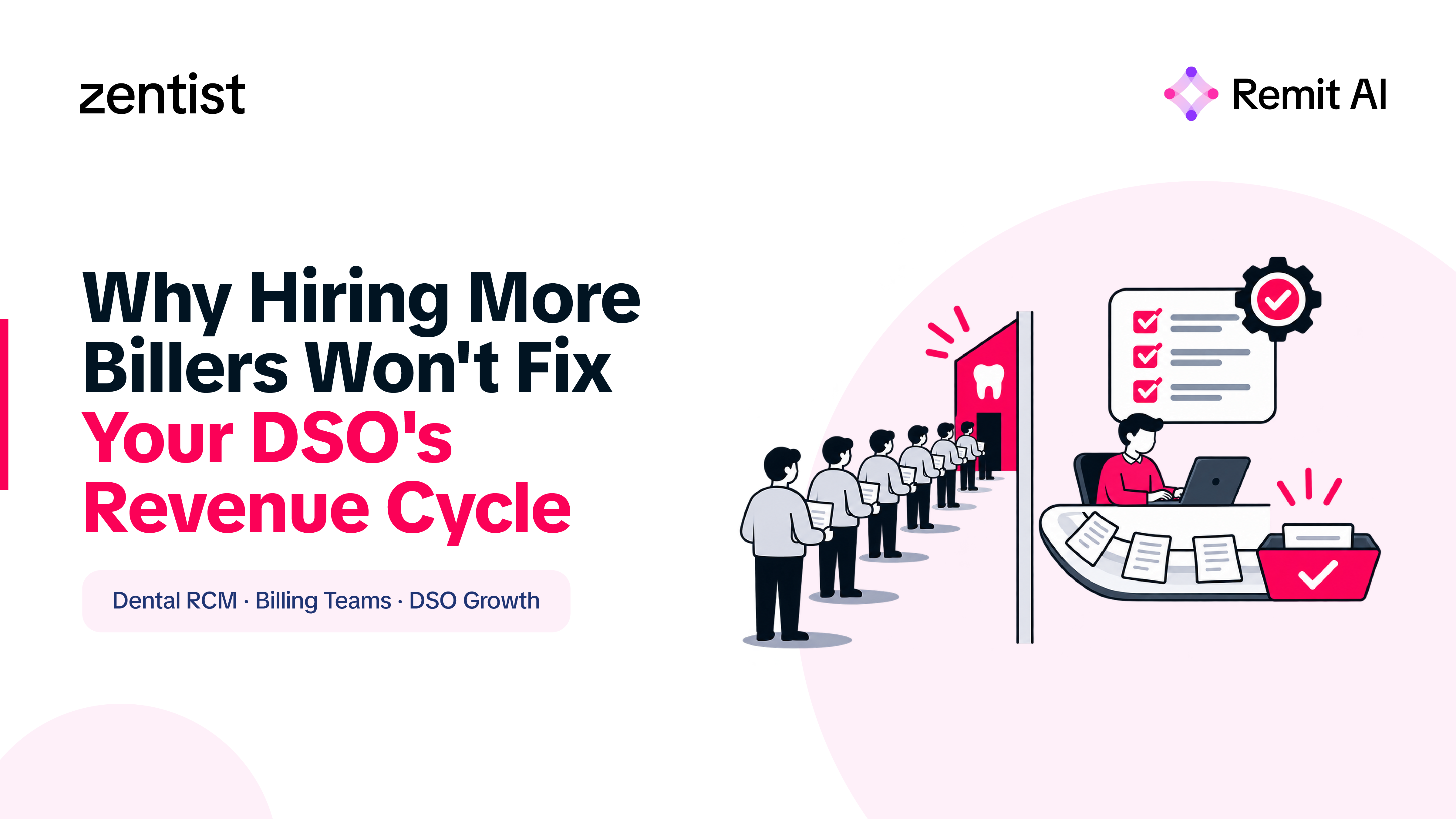
When claims pile up, and AR starts to age, most dental groups reach for the same fix: open another billing requisition, or send more work offshore. It feels responsible, and for a few months it works. Then the group adds two locations, the backlog returns, and the cycle repeats. The billers aren't the problem. The queue is. As long as every payment, rejection, and status check has to pass through a person, more people only build a longer line.
Why doesn't adding billers fix the backlog?
Adding dental billing staff adds capacity, but it doesn't change how much work needs a person in the first place. If every EOB has to be downloaded, every payment matched, and every rejection researched by hand, a new hire clears yesterday's pile while tomorrow's work enters the same process.
Most dental revenue cycle management still runs like a factory of human queues. One person pulls the EOB, another matches it to the claim, someone posts the payment, and someone else chases the balance. Every handoff is a place where work waits. McKinsey's January 2026 report, Agentic AI and the race to a touchless revenue cycle, found that staffing constraints are the primary limit on finishing back-end revenue cycle work. That research covers health systems, not dental groups, but the lesson carries over: when throughput depends on headcount, headcount becomes the ceiling.
Why do billing teams become the bottleneck as DSOs grow?
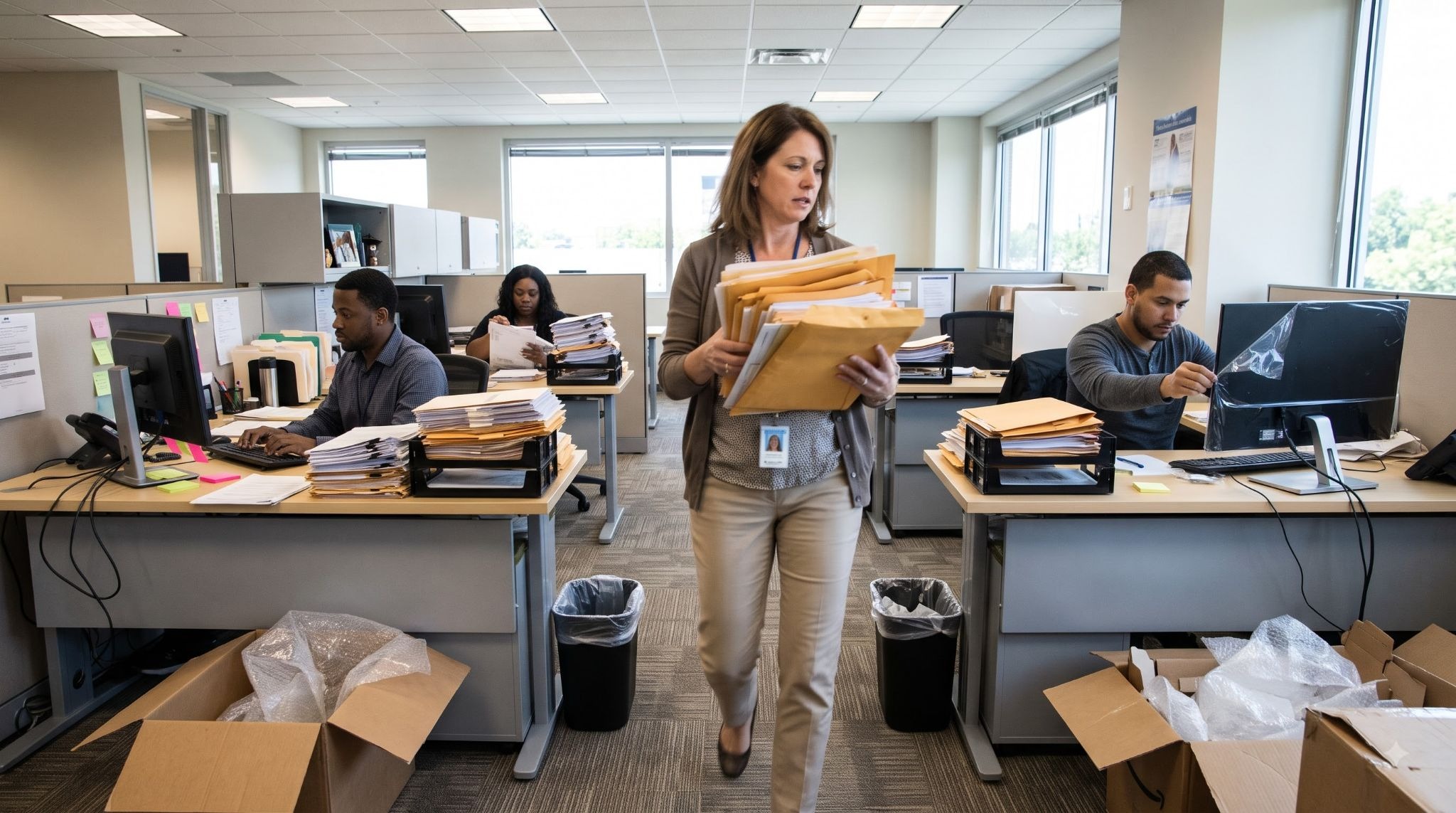
Every new location adds manual work without removing any. An acquisition brings new payer portals and logins, more EOBs, more posting volume, and a fresh set of exceptions, and the billing team absorbs all of it.
Headcount grows roughly in a straight line, one biller at a time. Payer complexity grows faster, because every new combination of location, plan, PMS, and workflow adds its own rules. Hiring and training a biller also takes months, and when an experienced person leaves, the knowledge of how a particular payer behaves often leaves with them. Zentist's 2026 Dental RCM Trends Insights Report found that 63% of practices report strong revenue but exhausted teams, and 78% of billing professionals say denials are rising. That's what a bottleneck looks like from the inside.
Do offshore and remote billing teams solve it?
Offshore and remote teams change who does the work and where. They don't change how much work needs doing. Moving the same manual process to another time zone relocates the queue rather than removing it.
That isn't an argument against remote teams. A good partner can add real expertise or short-term capacity. The question is whether the arrangement removes work or just adds people to it. If documents are still downloaded by hand, payments are still matched by hand, and exceptions still bounce back to the location for answers, the dependency chain is the same, only longer. Before signing, ask any partner which transactions will no longer need a person at all, who owns reconciliation differences, and whether leadership can see aging and open exceptions without asking for a spreadsheet. Zentist's guide to outsourcing, keeping billing in-house, or automating compares the three models side by side.

So, what makes the difference?
The math changes when routine work stops reaching a person. The goal isn't faster clicking. It's fewer transactions that need a click at all: software handles the repeatable steps, and the billing team handles the exceptions that need judgment.
In practice, that means EOBs and ERAs are collected without anyone logging into portals, payments are matched and reconciled against deposits automatically, posting happens without rekeying, and routine rejections are diagnosed and prepared for resubmission. What reaches a biller is the work that needs a person: an ambiguous adjustment, a disputed underpayment, a missing document, an unusual benefit interpretation, each with the evidence attached.
This makes the team's payer knowledge more valuable, not less. Instead of rekeying the same information every day, experienced billers define how exceptions get handled, spot patterns across locations, and fix problems at the source.

What should leaders measure instead of headcount?
Measure how much work reaches a person at all, where it comes from, and how long it takes to become accurately posted cash. Headcount alone can't tell a real capacity shortage from a process that creates unnecessary work.
Break results down by payer, location, and exception type, because a healthy group average can hide one office with a recurring problem.
Should DSOs ever hire more billers?
Yes, when the shortage is in judgment, not in routine work. Hire when complex exceptions, appeals, and payer disputes genuinely outgrow the team. Outsource when a specialist has a clearly defined role. Automate when repeatable work can safely leave the human queue. Compare all three on the full cost of getting work done right, including supervision, training, rework, and turnover, not on salary or vendor fees alone.
How does Zentist help DSOs scale billing without more headcount?
Zentist runs the routine, and your team runs the exceptions. Remit AI collects EOBs and ERAs across payers with no portal logins, matches every payment to its remittance, reconciles it against the bank deposit, and posts it through Autoposting. Caviar prioritizes the AR that needs attention first, and its agentic claims review diagnoses rejected claims and resubmits them after a biller approves the fix.
The result shows up in capacity, not just speed. Imagen Dental Partners went from 5 to 20 practices per payment poster, and Harbor Dental Clinic saved 30 hours of billing work a week. Same team, more locations.
Before you approve the next billing requisition
Ask which work should never reach a biller, which exceptions deserve their expertise, and which upstream problems keep coming back. Zentist helps 5,000+ dental practices and DSOs take the routine out of the queue. See how Remit AI works.
FAQ
Heading

Answer

