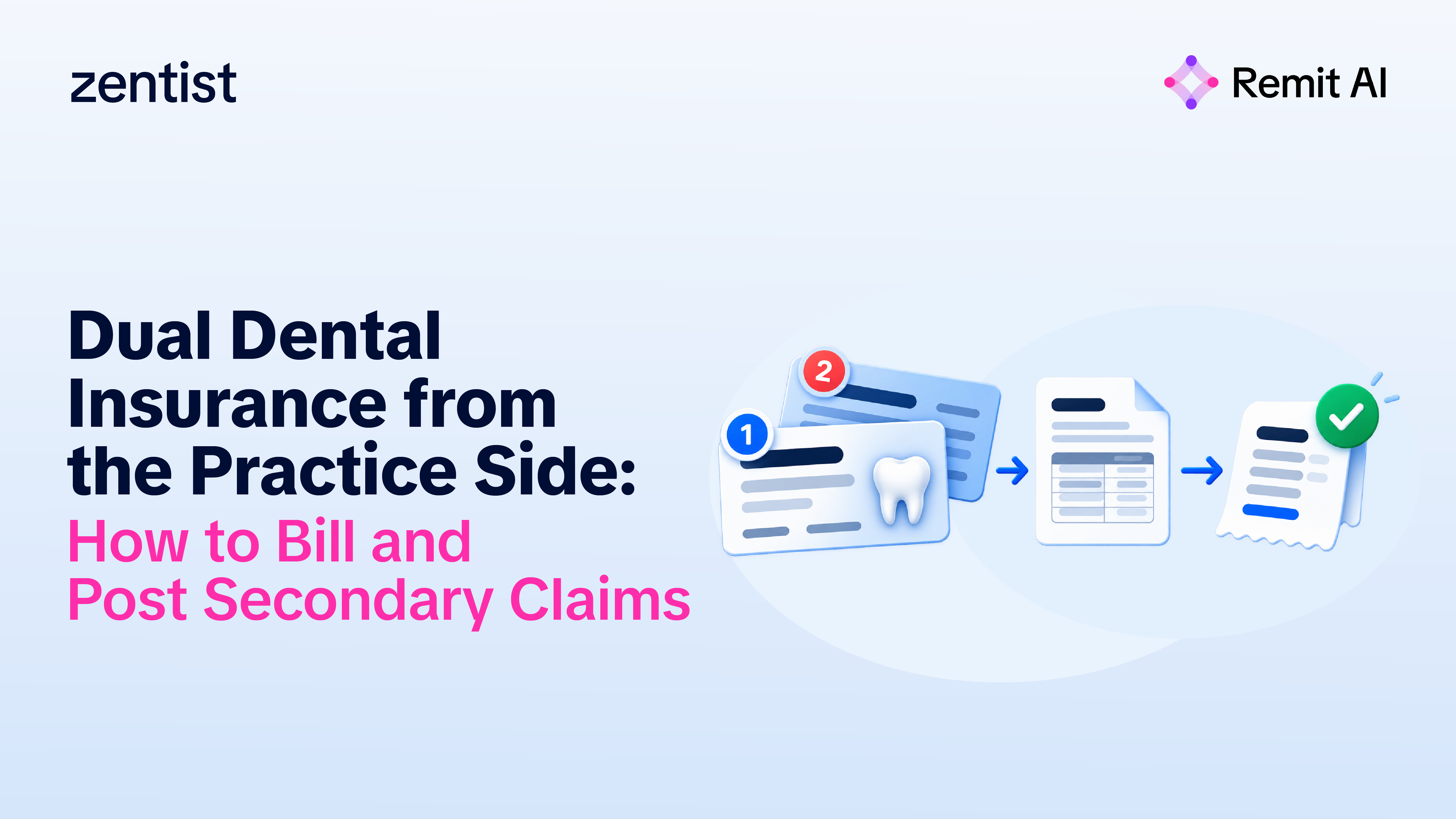
A patient with two dental plans sounds like good news for collections. In practice, it often means two eligibility checks, two claims, two EOBs, and twice as many ways for a balance to go wrong. Most of the trouble comes from three places: putting the plans in the wrong order, sending the secondary claim without the primary EOB, and posting both payments as if they were one.
Can you have two dental insurances?
Yes. A patient can be covered by two dental plans at the same time, most often through their own employer and as a dependent on a spouse's plan, or as a child covered by both parents. One plan pays first as the primary, and the other reviews what's left as the secondary. The two plans don't simply each pay in full. They coordinate, and the ADA's coordination of benefits overview notes that combined payments can't exceed the cost of care.
For the billing team, dual coverage starts at intake. Collect both subscribers' names, dates of birth, member IDs, and group numbers, and confirm the patient's relationship to each subscriber. A spouse's plan added later, or a child listed under the wrong parent, is the most common reason a dual coverage claim stalls before a payer ever reviews it.
How do you know which dental plan is primary?
The plan where the patient is the employee or main policyholder is primary, and the plan where they are a dependent is secondary. For a patient with coverage through their own job and a spouse's job, their own plan pays first.
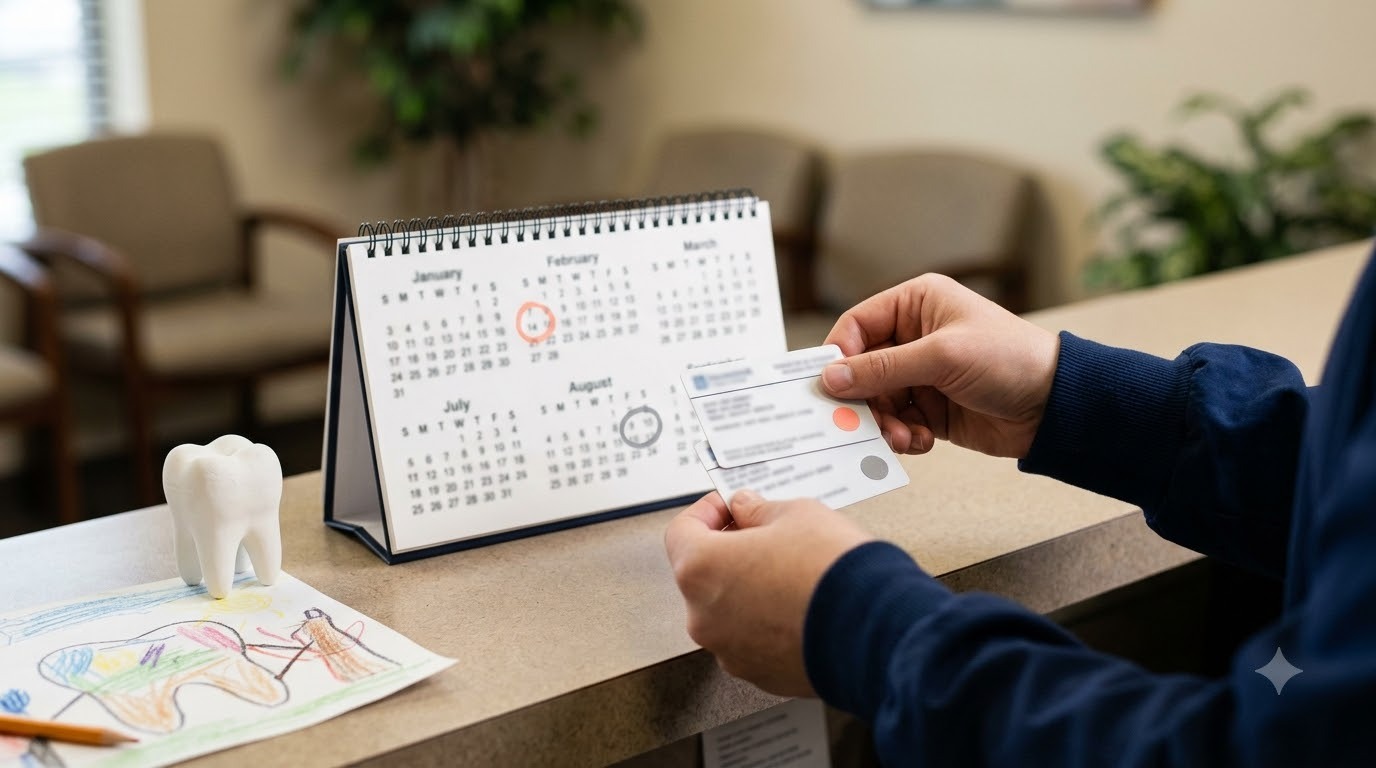
Children covered by both parents usually fall under the birthday rule. The parent whose birthday comes earlier in the calendar year holds the primary plan, and only the month and day count, not the birth year. A parent born on March 10 is primary over one born on August 2, even if the August parent is older. For divorced or separated parents, a court decree takes precedence, and state rules can also change the order, so confirm rather than assume.
Employment status matters too. The ADA's guidance on coordination of benefits states that coverage through current employment is primary over COBRA or retiree coverage. That's why the team should record where each plan comes from, not just the carrier's name. One payer can administer an active plan and a retiree plan with different rules.
This is also where Remit AI starts helping. Remit AI's eligibility verification runs ahead of scheduled visits and captures coordination of benefits details for patients with dual coverage, so a wrong plan order is caught at the front desk instead of on a denial weeks later.
How does secondary dental insurance work?
The secondary plan reviews the claim only after the primary has processed it, and it usually won't act without the primary EOB. That EOB shows the secondary payer the fee, the allowed amount, the write-off, the deductible and coinsurance applied, and what the primary paid. The secondary then decides what, if anything, it owes under its own coordination method.
That method makes a big difference to the patient's balance. The ADA guidance describes four common approaches. Traditional coordination of benefits lets the two plans together pay up to the full cost of care. With a carve-out, the secondary works out its normal benefit and subtracts what the primary paid. With non-duplication of benefits, the secondary pays nothing if the primary already paid at least as much as the secondary would have paid as primary. Maintenance of benefits reduces the covered charge by the primary's payment before the secondary applies its deductible and coinsurance, so the patient usually owes something. The ADA notes that non-duplication is common in self-funded plans and that California has banned it.
Knowing which method the secondary uses before treatment is what makes the patient estimate honest. A patient who expects two plans to cover everything, and then gets a bill because the secondary uses non-duplication, is a collections problem the practice could have prevented with one line on the estimate.
How do you bill a secondary dental claim?
Bill the primary first, wait for its EOB, post it, then send the secondary claim with the primary's payment details attached. The primary claim goes out through the practice management system and clearinghouse with the plans entered in the right order. The other coverage section of the claim has to match what's on file for the secondary subscriber, which Zentist's guide on how to fill out the ADA dental claim form walks through field by field.
When the primary's response arrives, the secondary claim follows through the same PMS and clearinghouse workflow, with the primary EOB attached or its payment data included electronically. This is where secondary billing most often stalls. The primary EOB is sitting in a payer portal, in the mail, or in someone's inbox, and the secondary claim waits for it.
Remit AI removes that wait. It collects EOBs and ERAs automatically from 725+ payers with no portal logins, so the primary's payment details are in hand as soon as the payer releases them and the secondary claim can go out the same day. If you need a refresher on what those documents contain, Zentist's guide to remittance advice in dental billing covers EOBs, ERAs, and the adjustment codes on them.
How should you post primary and secondary payments?
Post each payer's response separately, against the right claim and the right plan. Start with the primary: its payment, contractual adjustment, deductible, coinsurance, and any denial or remark codes. Leave the remaining balance open for the secondary instead of moving it to the patient while a secondary claim is still pending. When the secondary pays, post that payment and its adjustments on their own, then move only the true remainder to patient responsibility.
Mixing the two payments into one entry is how dual coverage accounts end up wrong. Patients get billed for amounts the secondary later pays, credits pile up, and refunds follow. Remit AI's Autoposting tool posts both payments into the PMS as separate primary and secondary entries, exactly as each payer processed them, so the ledger shows what each plan paid and what the patient truly owes. Remit AI then reconciles both payments against the bank deposits they arrived in, which catches a missing secondary payment before it turns into an aging balance.

Why do secondary dental claims get denied?
Most secondary denials are administrative, not clinical. The most common is wrong coverage order: the secondary payer believes another plan should have paid first, usually because dependent status, the birthday rule, or a retiree or COBRA plan wasn't checked. Close behind is a missing primary EOB, which leaves the secondary nothing to calculate from. Subscriber mismatches in a name, date of birth, member ID, or relationship to the patient stop claims too, especially for children on two parents' plans. Outdated coverage is another frequent cause, when a patient changed jobs, lost COBRA, or retired and the PMS still shows the old plan.
Remit AI reads each denial and translates it into a plain-English reason with a recommended next step, so the team knows right away whether to resend with the primary EOB, correct the plan order, or update the subscriber record. For claims rejected before adjudication over subscriber or eligibility details, Caviar's agentic claims review uses an AI agent to diagnose the rejection and resubmit it, and flags anything that still needs a person. All claim submission still runs through the practice's PMS and clearinghouse.
Prevention starts earlier. Zentist's guide to dental insurance verification software explains how automated eligibility checks capture coordination of benefits details before treatment, which stops most of these denials from happening at all.

See how Remit AI handles dual coverage
Remit AI verifies coordination of benefits before the visit, collects primary and secondary EOBs from 725+ payers, posts both through Autoposting, and reconciles every payment for 5,000+ dental practices. See how Remit AI works.
FAQ
Heading

Answer

