In the RCM world, there is a common trap: building a product that is "powerful but heavy." When you focus exclusively on the largest DSOs, you risk becoming a legacy solution that takes six months to implement and an army of consultants to maintain.
At Zentist, we’ve taken a different path. We believe that true category leadership requires serving the full market. By bringing enterprise-grade sophistication to mid-market groups, we’re not just giving them better software; we’re reframing their entire understanding of what’s possible in their revenue cycle.
Here is why serving the full market is the only way to build a platform that actually scales.
1. Bringing "Basis Point Obsession" to the Mid-Market
Smaller and mid-sized groups often come to us looking for “auto-posting.” It’s a basic efficiency play. But what actually changes their business and what they didn’t even know to ask for is the full financial reconciliation layer that enterprise groups have relied on for years.
In a typical mid-market workflow, there’s an assumption that if an EOB or ERA is received, the cash is in the bank. We break that assumption. Instead of just posting data, Remit AI ties together bank deposits, payer data, claims, and line-item adjustments into a single, reconciled view of cash.
When a 15-location group sees real-time detection of missing payments, underpayments against fee schedules, and deposit mismatches, it’s a lightbulb moment. They realize they’ve never actually had visibility into what hit the bank versus what the PMS says should have been collected. We’re moving them from "I think we’re being paid" to "I know exactly where every dollar is."
2. Turning Denials from a Burden into a Process
The second major unlock is denial intelligence. In the SMB and mid-market space, "denied" is usually just a generic status a pile of work that people pick through manually.
Enterprise DSOs can’t afford that ambiguity; they demand structured denial management. We’ve brought that level of detail down-market by surfacing denial reasons at the line-item level and classifying them into terminal (write-offs) versus actionable (resubmit or appeal).
For a smaller group, this is a game-changer. Instead of chasing every denial, their teams can prioritize the ones that actually drive cash and execute faster with guided workflows. We’re turning a reactive, manual burden into a structured, revenue-generating process.
3. The Connectivity Gap: Why "Built for Your Size" is a Trap
When I’m talking to a group with 10–20 locations that is also looking at SMB-focused RCM tools, I lean heavily on our enterprise connectivity with Remit AI. SMB tools usually force you to change your workflow to fit their "box." Because Zentist was built for enterprise scale, we support a massive network of payers along with deep bank, clearinghouse, lockbox, and EFT integrations, all unified in one system. We plug into whatever mix a group already has without forcing them to change how they work.
Combined with our flexible API architecture, this reframes the decision for the customer. It’s no longer about what works for 15 locations today; it’s about what will actually scale with them to 100 locations tomorrow. That is where SMB tools consistently fall short.
4. The Strategy: Depth Combined with Speed
Serving both ends of the market forces us to combine depth with speed.
If we only focused on the enterprise, we’d risk becoming a slow-moving giant. By supporting the mid-market, Zentist is forced to deliver enterprise-grade capability with a go-live measured in weeks, not months. We’ve built a platform that allows smaller groups to capture value quickly without a massive operational overhaul.
That speed actually becomes our greatest competitive advantage when we move back up-market. Even the largest DSOs in the country are starting to expect faster time-to-value. By dominating both segments, we ensure we’re never perceived as "complex and slow," but rather as the platform that scales with customers at every stage of their journey.
To lead the category, you can’t just be the biggest. You have to be the most adaptable.
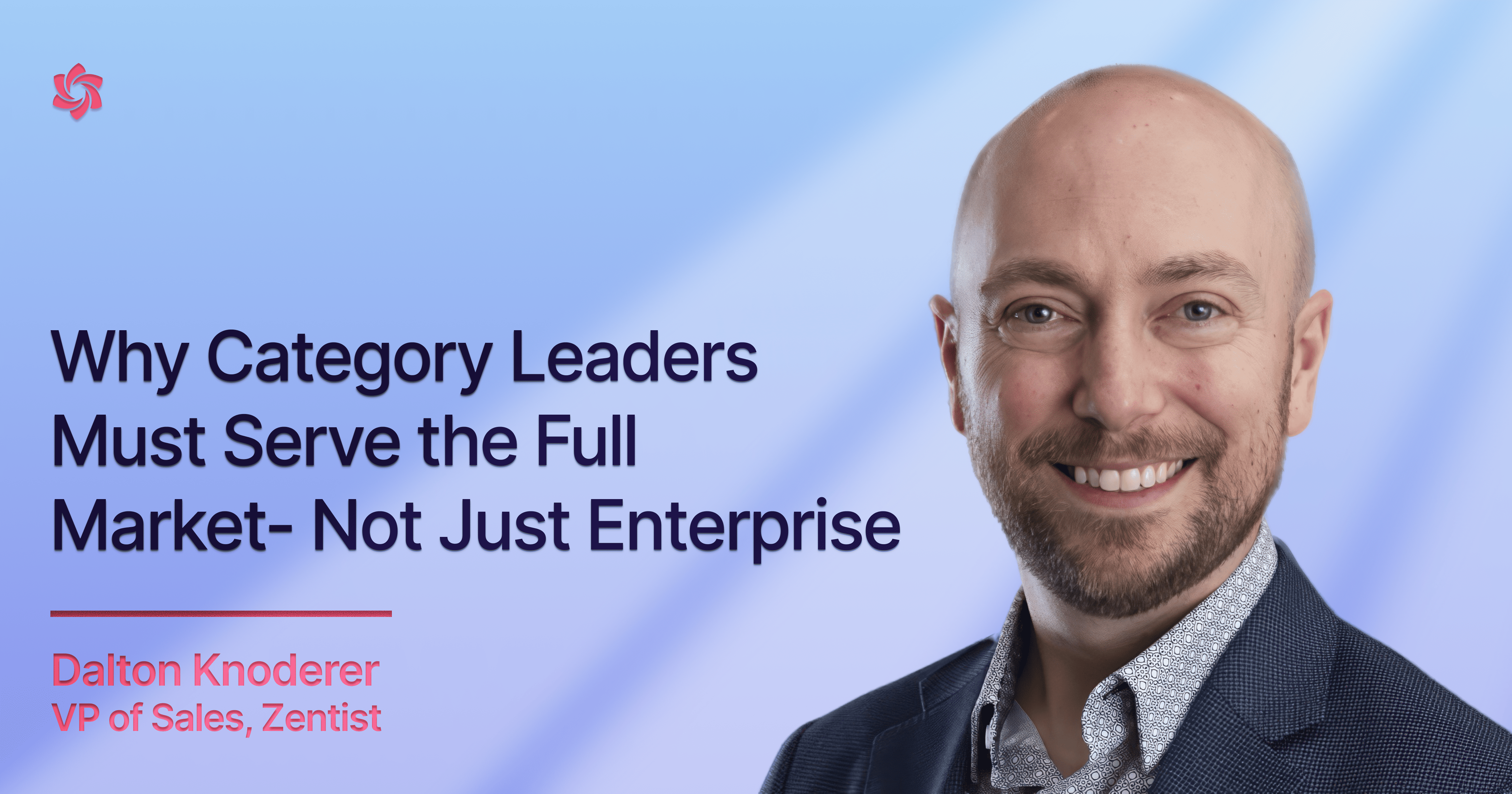
Author- Dalton Knoderer
VP of Sales, Zentist
Curious how AI speeds up collections specifically? Read our guide on accelerating collections in dental insurance billing.
FAQ
Heading

Answer

