Unapplied credits are insurance or patient payments that have been received and recorded but not yet applied to the claims, procedures or patient balances they belong to. The money is in the bank, but the books don't know what it paid for. In a multi-location dental group, these quietly pile up, inflate AR, and turn into a cleanup project every month-end.
What are unapplied credits in dental billing?
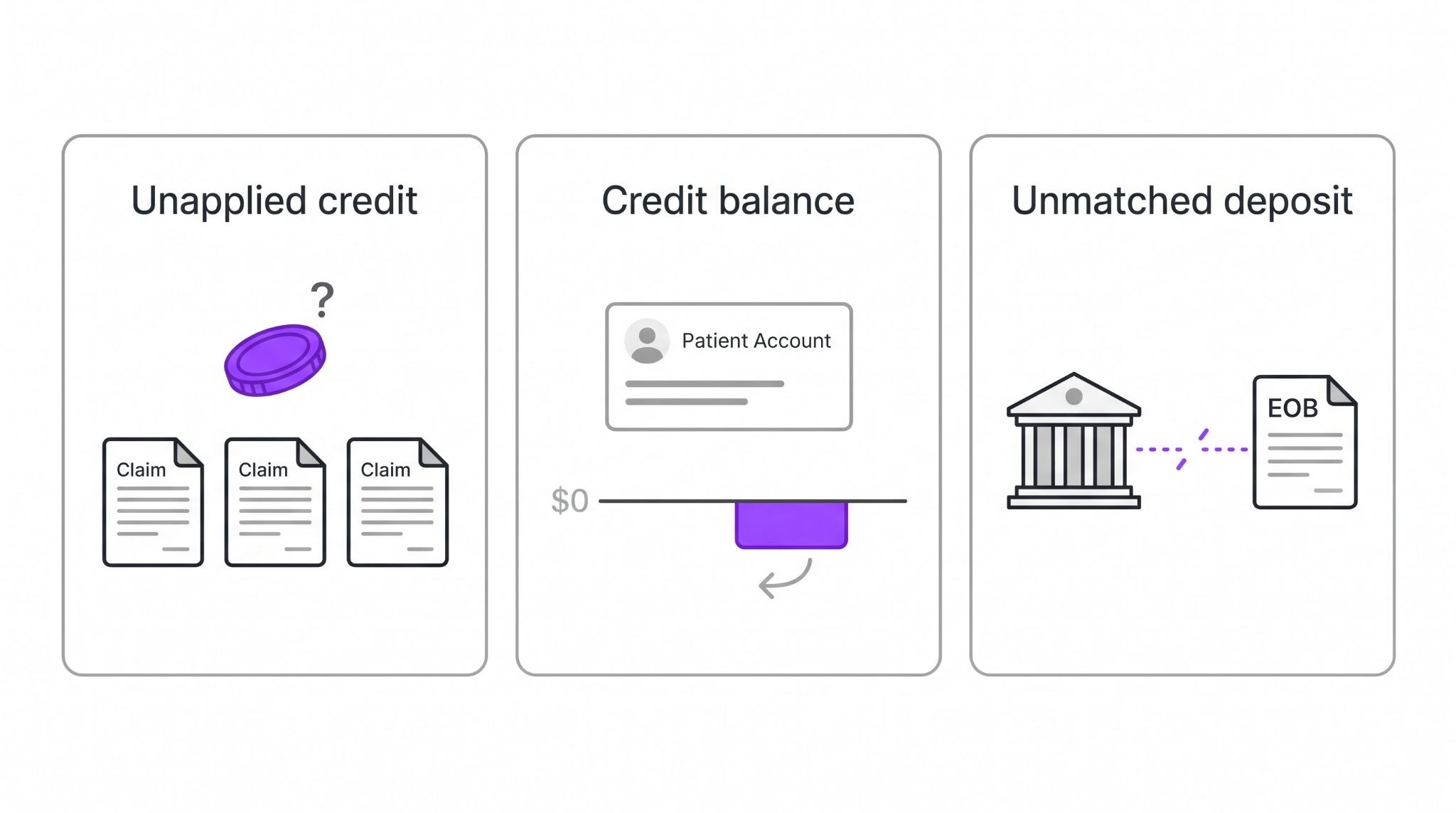
An unapplied credit is money that's been recorded but not allocated. A payment shows up on the ledger, but it hasn't reduced the specific procedure or claim balance it was meant to pay, so that balance still looks open.
Not every unapplied credit is a mistake. A patient who prepays before treatment has a legitimate unapplied payment until the procedure is posted. The problem is the ones nobody is tracking: insurance payments that were never matched to their claims, payments posted to the wrong patient or location, and leftovers from partly posted bulk payments. "Unapplied cash" and "unapplied payments" describe the same problem.
What is the difference between an unapplied credit and a credit balance?
An unapplied credit is money waiting to be applied. A credit balance means an account shows that a patient or payer has paid more than is owed. An unmatched deposit is a third problem: money in the bank that hasn't been tied to its EOB or ERA yet.
The three can overlap, but they need different fixes. A credit balance isn't automatically missing cash, and an unapplied credit isn't automatically an overpayment.
Why do unapplied credits build up in dental groups?
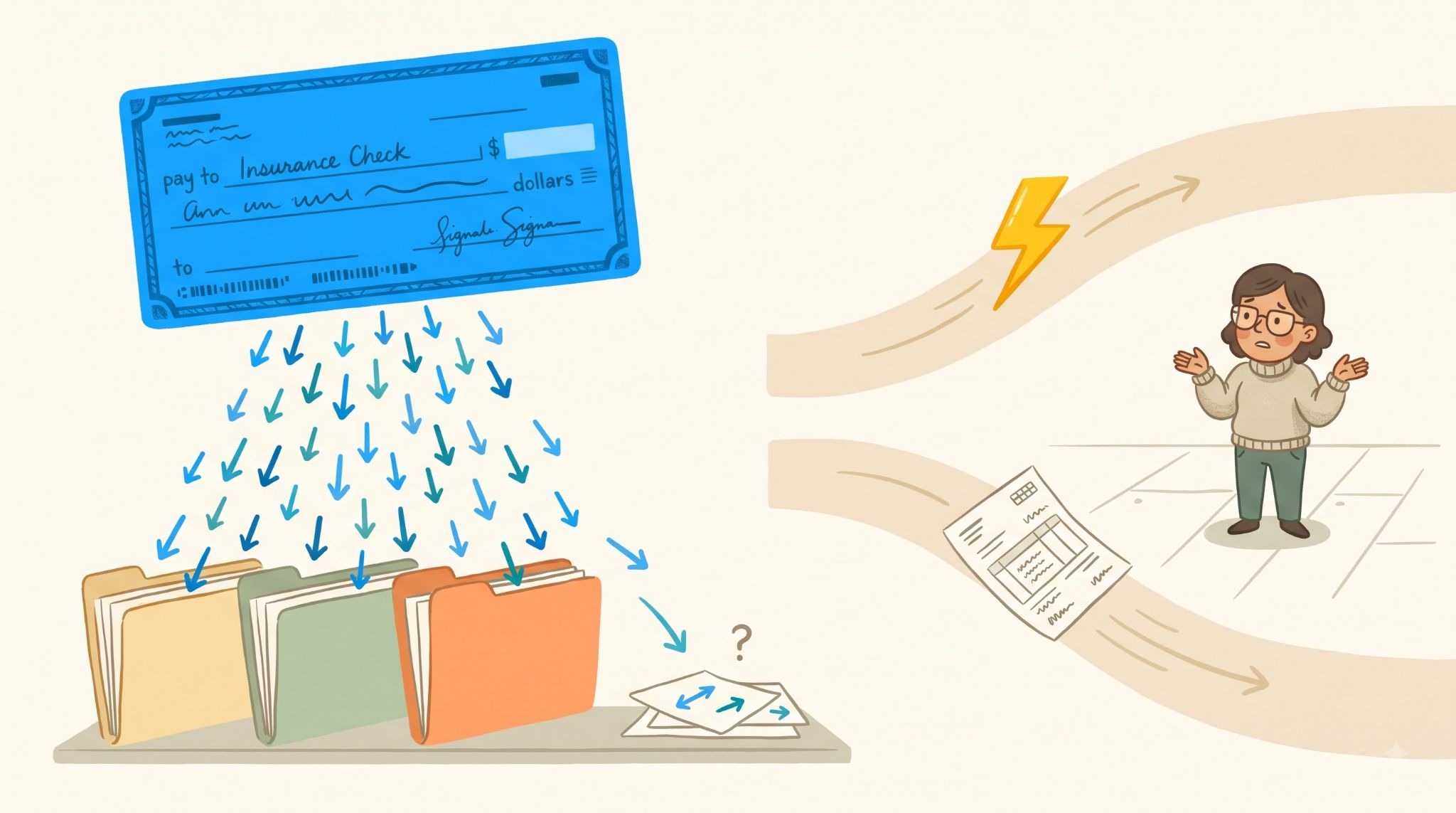
Most unapplied credits come from payments that arrive in one form and have to be split or matched in another. Dental groups have more of these handoffs than most businesses.
A single bulk insurance payment can cover dozens of patients. If only part of it gets posted, the rest sits unapplied even though the deposit is complete. EFT deposits and ERAs travel separately, so the deposit can arrive before the explanation. Under the CMS operating rules for EFT and remittance advice, a trace number links the two, but someone or something still has to make that match. Paper checks and EOBs add another step, because depositing a check doesn't post it. Virtual card payments add card fees that can be mistaken for unpaid amounts. Payments posted to the wrong patient or location, prepayments waiting on treatment, and different practice management systems across acquired offices make it worse.
Why do unapplied credits matter to leadership?
Unapplied credits distort the numbers leadership relies on. Claims look unpaid when they've been paid, so AR looks higher than it really is, and real collections can disappear from location and provider reports.
That flows straight into KPIs like days in AR and net collection rate, which is why a rising AR figure should be checked against unapplied credits before anyone assumes collections got worse. Zentist's dental KPI dashboard guide covers how these metrics are calculated. Patients can also get statements for balances they've already paid. And when a credit is a real overpayment, leaving it unresolved creates refund and compliance risk. Overpayment and refund rules vary by state and payer contract, so groups should confirm their own obligations with their advisers.
How do you clear unapplied credits?
Clear them one documented item at a time: list them by location and age, match each payment to its remittance and deposit, apply what can be applied, investigate the rest, refund true overpayments, and fix whatever caused them.
Start by running an unapplied credit report for each location, sorted by age, and give every item an owner and a next step. Keep documented prepayments separate so they don't get mixed in with real exceptions. For insurance payments, tie each ledger entry to its EOB or ERA and then to the bank deposit, using the payment reference, payer, amount and EFT trace number. Matching on amount alone isn't enough.
Then apply the existing payment to the right claims or balances. Don't record a new receipt just because the first one was never applied, or the cash gets counted twice. If a payment belongs to another patient or location, move it through an approved correction so the original reference stays on record. For anything left over, request missing remittances and check whether charges and secondary insurance activity were posted correctly. Once an overpayment is confirmed, work out whether the patient or the payer is owed the money (with two insurers, it may be the payer) and refund it through your approved process. Finally, record why each item happened. If "missing remittance" or "wrong account" keeps coming up, fix that before the next month-end.

How do you stop unapplied credits from coming back?
Match every payment to its remittance and reconcile it to the bank deposit as it arrives, not at month-end. When a deposit lands before its ERA, track it as an open exception with an owner instead of forcing a match.
Consistent posting across locations matters just as much: the same rules for references, prepayments, corrections and who owns exceptions, even when offices run different systems. Billing managers should review both the dollars still unapplied and the reasons they're open, because a smaller total doesn't prove the cause is fixed. Zentist's comparison of manual vs automated remittance posting shows how much of this work automation removes.
How does Zentist help prevent unapplied credits?
Zentist stops unapplied credits where they start: when the money arrives. Remit AI collects EOBs and ERAs across payers, automatically matches every EFT to its remittance, reconciles each payment against the bank deposit, and posts it through Autoposting. Payments that can't be matched become flagged exceptions with the details attached, not mystery credits.
For paper checks, Vault gives each location a dedicated PO box, then reads, deposits, and matches mailed checks and EOBs the same business day. For virtual card payments, see whether your group should accept virtual card payments at all.
Close the books without the cleanup
Zentist helps 5,000+ dental practices and DSOs match, reconcile, and post every insurance payment as it arrives. See how Remit AI works.
FAQ
Heading

Answer

