The most dangerous assumption in dental RCM right now isn't about technology. It's about simplicity.
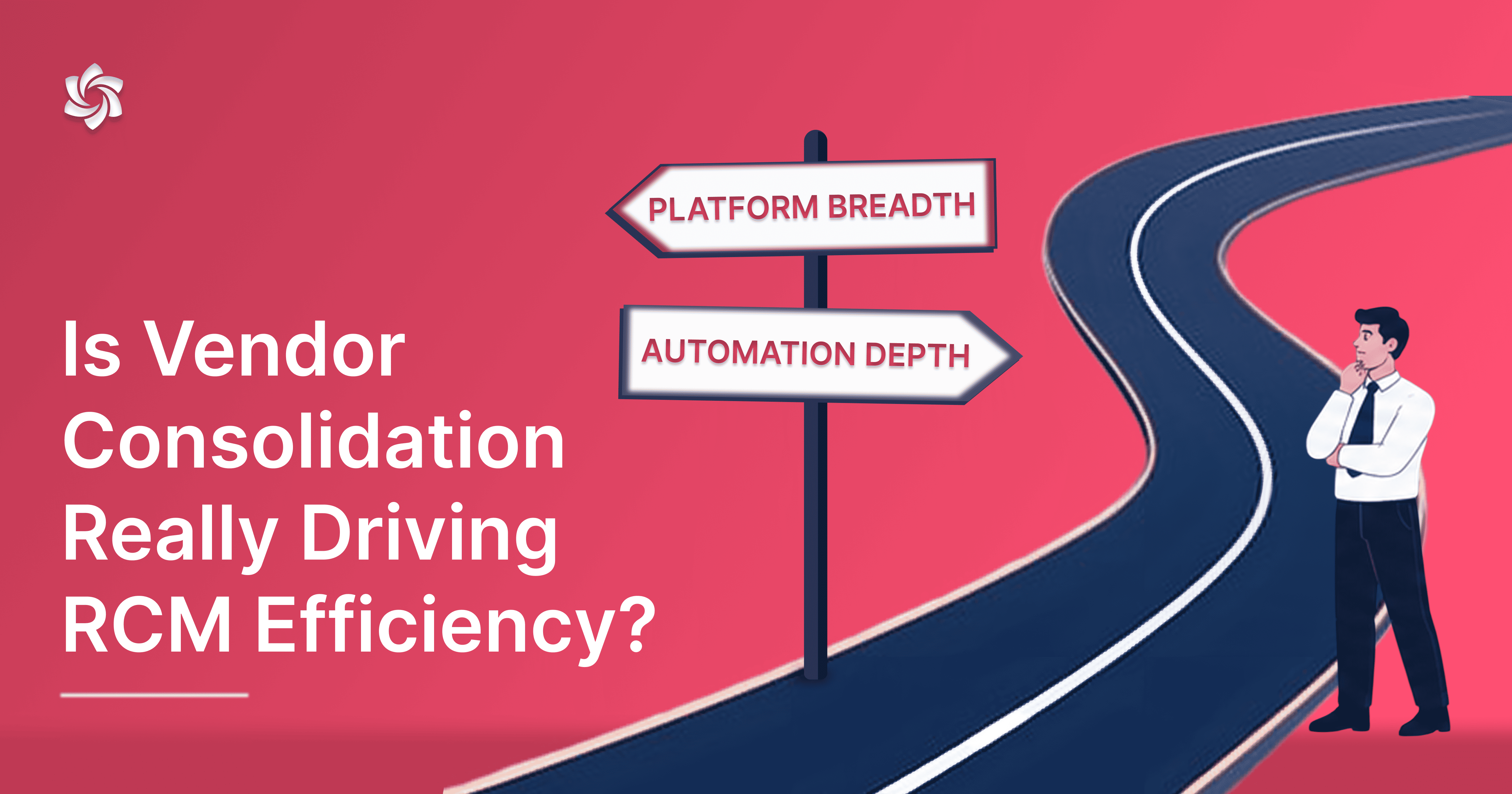
A growing number of platforms are pitching DSOs on the idea that operational efficiency follows from vendor consolidation, that fewer systems mean fewer problems, and that an all-in-one solution is the natural next step after digitization. The logic sounds clean: reduce your vendor count, reduce your complexity, reduce your overhead.
But when you look at how DSOs actually lose money in the revenue cycle, vendor count is rarely the culprit. The real source of operational drag is something more specific: critical financial workflows that are partially automated but still dependent on human intervention to close the loop. And that distinction changes everything about how you should be evaluating your RCM technology.
Breadth Is Not the Same as Depth
When a platform says it handles claims, eligibility, payment posting, denials, AR workflows, and reconciliation, what it's describing is coverage — a list of the workflows the system touches. What it isn't describing is how deeply it automates each one, how often staff still need to intervene, or how reliably it performs under real operating conditions at scale.
This gap between coverage and maturity is where DSO leaders get burned. A workflow can exist inside a platform and still depend heavily on manual exception queues, staff validation, spreadsheet reconciliation, and operational workarounds. In RCM, "mostly automated" often still means operationally dependent on humans, which means it doesn't scale without headcount.
That's why vendor count is not a reliable measure of operational maturity. A single consolidated platform with shallow automation across twelve workflows creates more operational burden than two systems where the critical workflows are genuinely automated end-to-end. The complexity your teams feel every day isn't generated by systems existing in parallel. It's generated by processes that still require human judgment to complete.
Where the Financial Risk Lives
Payment posting is the clearest example of how this plays out in practice and the most misunderstood workflow in dental RCM.
It's typically treated as back-office administration: a task to be completed, not a process to be optimized. But payment posting sits at the center of financial truth for a DSO. Its accuracy and timeliness determine the reliability of your AR, the integrity of your reconciliation, the quality of your payer accountability data, and the speed of your month-end close. When posting is delayed or inconsistent, the effects don't stay contained; they cascade downstream into collections reporting, denial workflows, and forecasting.
At scale, the relevant question isn't whether your platform can post payments. It's whether it does so accurately, automatically, and without your team needing to validate the outputs. Those are materially different operational realities.
Parkview Dental Partners experienced exactly this distinction when they implemented Remit AI’s structured payment automation: AR days dropped from approximately 30 to 17, and the improvement in cash turnaround wasn't incidental; it was a direct result of removing the manual friction that had been embedded in the posting process. The system didn't just cover the workflow; it completed it.
What Real Transformation Looks Like
Great Lakes Dental Partners achieved a 53% improvement in RCM productivity within 100 days of implementing structured automation across their revenue cycle, including hybrid and outsourced workflows that had previously been fragmented. That result didn't come from reducing the number of vendors they worked with. It came from increasing automation depth and standardizing execution so that staff were no longer functioning as a manual layer on top of a nominally automated process. In that same environment, EOB/ERA processing reached 96% automation, and claim-to-cash cycles improved by more than 50%.
Northstar Dental Partners tells a similar story. By automating key RCM workflows, they reduced AR days from 38 to 23 and recovered more than 250 operational hours per month — hours that had been absorbed by manual work inside processes that should have been running automatically.
None of these outcomes required platform consolidation as a prerequisite. They required automation that really went deep enough into high-friction workflows to eliminate the human intervention points.
The Real Risk of Prioritizing Consolidation
This doesn't mean consolidated platforms have no value. Reducing integration complexity, simplifying contracts, and unifying data environments can all create real operational benefits — when consolidation is paired with automation depth.
The risk is when consolidation becomes the primary evaluation criterion, rather than a secondary consideration. When that happens, DSOs often end up trading specialized, high-performing workflows for broader but shallower ones. They gain a simpler vendor landscape and lose ground on the financial workflows that determine their performance. Reconciliation stays manual. Exception volumes stay high. Teams are still validating outputs that were supposed to run automatically. The system count goes down; the operational burden doesn't.
The Questions That Should Drive Your Evaluation
As you evaluate your RCM technology stack, whether you're considering consolidation, adding a specialized solution, or benchmarking what you already have, the questions that matter most aren't about vendors. They're about workflows.
- Which financial processes have the highest impact on your cash position?
- Of those, how much is genuinely automated versus requiring staff involvement to complete?
- Where are your teams spending time today that they shouldn't need to?
- How does automation performance hold up not in a demo environment, but under real conditions at your current scale, and at the scale you're planning for?
Because the goal of RCM transformation isn't a cleaner vendor list. It's a revenue cycle where your highest-stakes financial workflows run reliably, accurately, and without your best people spending their days managing exceptions. Fewer vendors might contribute to that outcome. But it won't create it on its own.
FAQ
Heading

Answer

